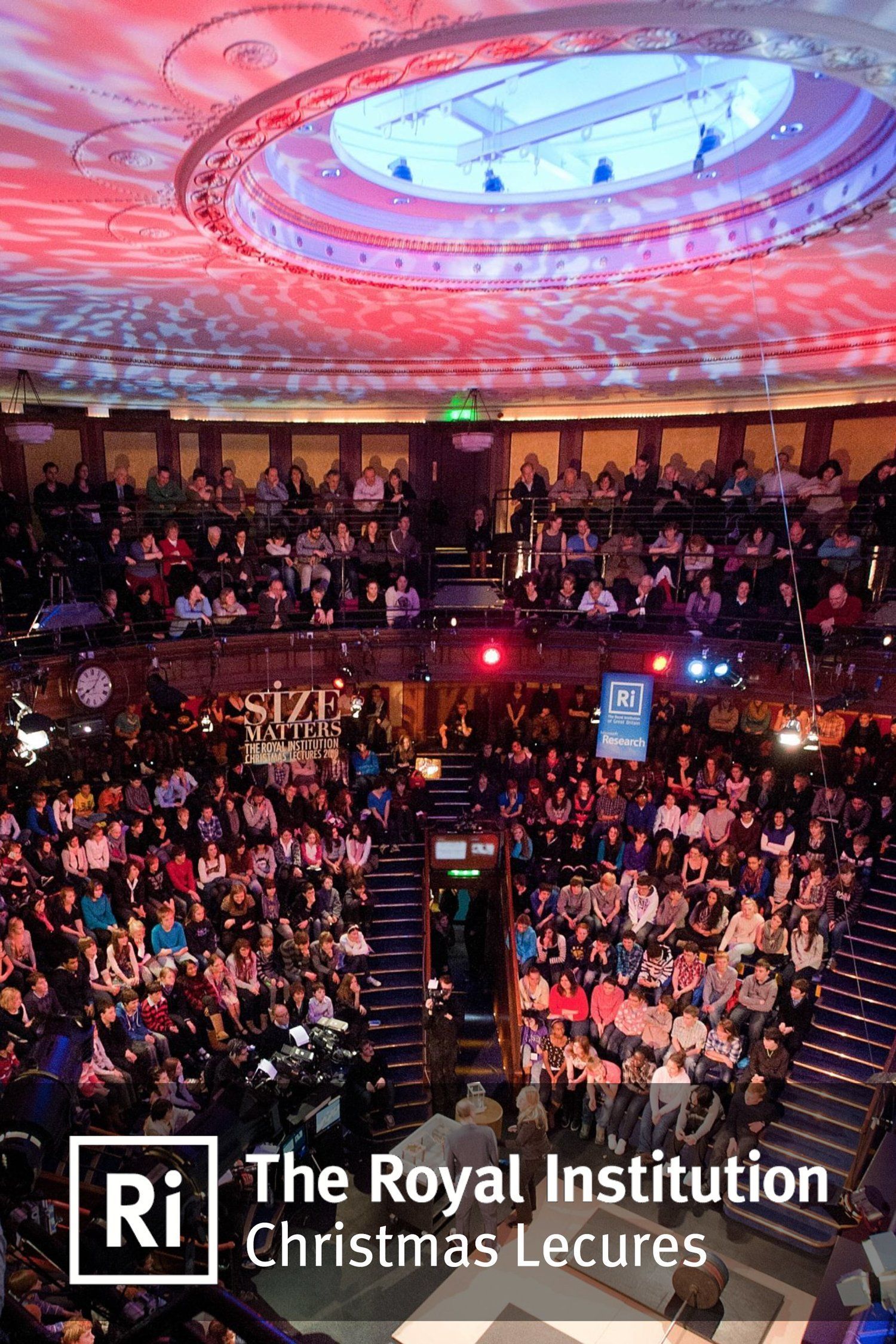
The Royal Institution Christmas Lectures
Reginald Victor Jones: From Magna Carta to Microchip
The CHRISTMAS LECTURES at the Royal Institution started in 1826, and there have now been more than one hundred and fifty in the series; and yet none has previously been on the theme of this year's lectures, which is measurement. Perhaps this is because the measurement is so much part of human life that we tend to take it for granted; but if we are to understand how our modern world, with all its achievements and its dangers, has evolved, then we need to know what measurement is, the principles by which measurements can be made, and why their applications have been of so much importance in the advance of science and in the development of technology
Where to Watch The Royal Institution Christmas Lectures • Reginald Victor Jones: From Magna Carta to Microchip
6 Episodes
- Principles, Standards and MethodsE1
Principles, Standards and MethodsMeasurement enables us to express our observation of objects in precise terms by converting into numbers. Using these numbers, be they inches, feet or millimetres, it is possible to duplicate exactly something we have measured in another place at another time. Without this capability our modern, industrial society could not have evolved. - The Measurement of TimeE2
The Measurement of TimeTime and its measurement has always preoccupied man. First he utilised natural time keepers: the rotation of the earth round the sun, giving the day and the year. But to divide the days into minutes and hours an accurate device was required. Galileo realised that he had one available in his own body-his heartbeat; and by counting his pulses while watching the incense-burning pendulum swinging in Padua Cathedral he made a fundamental discovery. - Onwards to the StarsE4
Onwards to the StarsThe range of measurement now possible has enabled us to know not only the size of atoms only a few 100-millionths of a centimetre across, but also the distance of galaxies so far away that light travelling from them takes thousands of millions of years to reach us. Between these extremes we shall see how the scale of our everyday life fits intricately into the immensity of the universe. - Measurement and Navigation in WarE5
Measurement and Navigation in WarDuring World War II, scientists on both sides were much concerned with the difficult problem posed by accurate navigation. However, as with so many war-time inventions, the consequent improvement in navigational methods were also used to drop bombs precisely and to guide long-range missiles to their distant targets. The subsequent development of early radio and radar guidance systems, today enables intercontinental rockets to be aimed with an accuracy of a few hundred yards from their intended target at a range of 8,000 miles. - Some Impacts of Measurement on Life: And Can We Take it too Far?E6
Some Impacts of Measurement on Life: And Can We Take it too Far?In this lecture we shall look at two triumphs of modern technology which enable us to measure and to control mechanisms with a precision of better than one ten thousandth of a centimetre. The first is familiar enough - the video disc - which gives us an instant replay of a football goal, or records a whole television programme. And the second is the microchip which involves the manufacture and positioning of minute stencils to etch electronic circuits - parts of which may be less than one thousandth of a centimetre across - and to reproduce them precisely by the million. Without such accuracy the microchip revolution could never have occurred.